
Blackjack • Guided practice
Blackjack Practice: Five Hands to Learn the Key Decisions
Use five realistic hands to practice standing, doubling, splitting, and declining insurance under the six-deck rules on Lucky Penny's blackjack table.
Updated September 28, 2026
Practice blackjack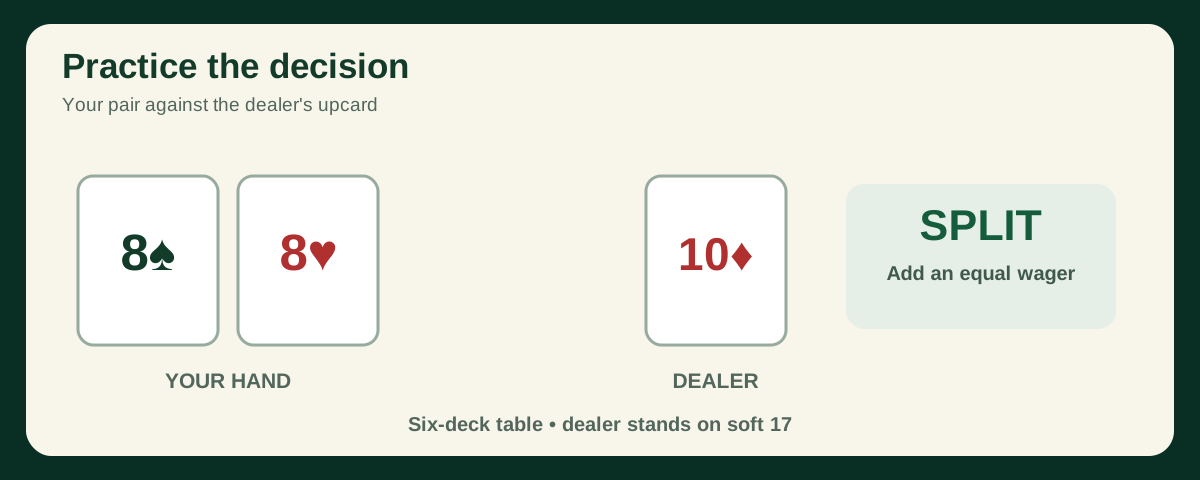
Learn the decision, then play the hand
The Lucky Penny practice table uses six decks, pays 3 to 2 on a natural blackjack, has the dealer stand on soft 17, and allows doubling after a split. Strategy changes when table rules change. Use these hands as checkpoints when they appear in play, not as a promise that the next card will be favorable.
The table is free to play with a guest bankroll. The Strategy Coach and guided learning require a free Lucky Penny Gaming Club account. With the coach on, make your choice first, then compare it with the recommendation and read why it fits the dealer's card.
| Your hand | Dealer shows | Practice decision | Why |
|---|---|---|---|
| Hard 12 | 4 | Stand | Let the dealer finish rather than risk busting. |
| Soft 18 (A,7) | 6 | Double | The flexible ace makes one more card attractive here. |
| Pair of 8s | 10 | Split | Two new hands are preferable to a hard 16. |
| Hard 11 | 6 | Double | A strong starting total against a weak dealer upcard. |
| Dealer ace | A | Usually decline insurance | It is a separate bet on the hole card, not a refund. |
What should you notice in each hand?
Hard 12 versus 4 is a good check on the urge to hit every low total. Soft 18 versus 6 teaches the opposite lesson: an ace counted as 11 can fall to 1, so the next card does not immediately bust the hand. A pair of eights shows why splitting is a new wager, not a free second chance.
Hard 11 versus 6 is the simplest doubling drill. You put up a matching second wager and receive exactly one additional card. Insurance is a separate side bet offered when the dealer shows an ace. Without information about the remaining shoe, basic strategy normally declines it.
If you cannot afford the additional wager for a recommended split or double, reduce your starting bet on the next hand. A correct decision still can lose; judge the choice by the rules and the dealer upcard, not one result.
A repeatable practice routine
Play at a small base bet until one of these five situations appears. Say your choice before opening the coach explanation. After the hand settles, record the upcard, your action, the coach's action, and one sentence about the reason. Repeat the same type of hand several times; do not chase a particular outcome.
Once these five feel familiar, move to the complete basic strategy chart. It is easier to learn a chart when you already recognize the decisions at a real table.
Try it at the table
Use practice credits to see how the rules work one decision at a time. There is no real-money wagering or cash prize.
Practice blackjack