
How to Play Soft Blackjack Hands
A soft hand contains an ace currently counted as 11. That flexible ace reduces immediate bust risk and creates opportunities to hit or double hands that would be played more cautiously as hard totals.
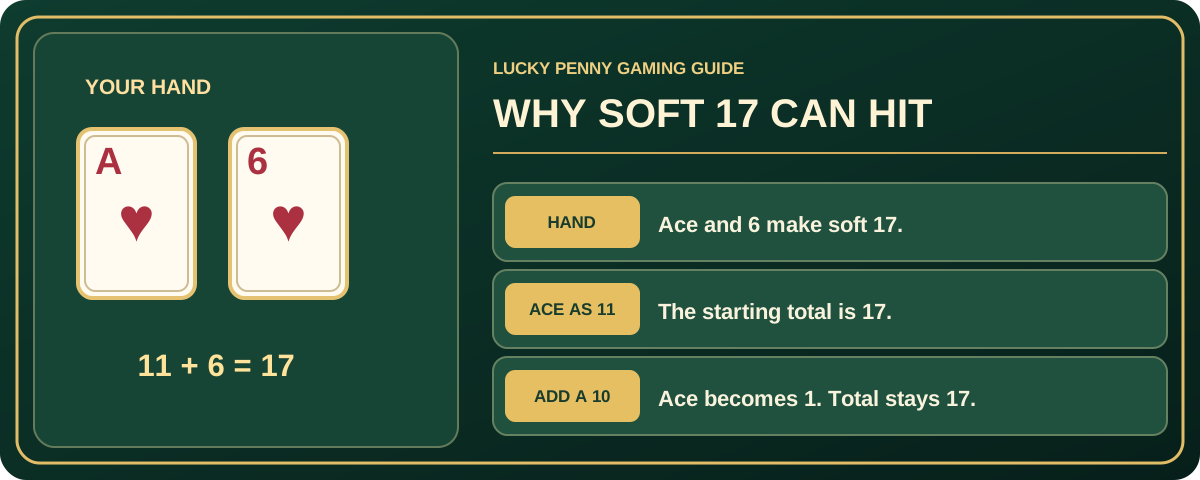
Treat the ace as 11 whenever that value keeps the hand at 21 or less. If the hand would otherwise bust, the ace changes to 1 automatically. This flexibility is why many soft hands should be hit or doubled rather than played like hard hands with the same total.
The ace changes the risk
A + 6 is soft 17 because the ace counts as 11. A 10 added to that hand does not bust it. The ace changes to 1, producing a hard 17 instead. By comparison, 10 + 7 is hard 17 because no ace can change value to protect the hand.
The ace counts as 11, but it can change to 1 if another card requires it.
The total has no flexible ace. Another card can immediately bust the hand.
Soft-hand basic strategy chart
This chart matches the Lucky Penny table: six decks, dealer stands on soft 17, double after split allowed, and no surrender. When the chart recommends doubling but the option is unavailable, use the fallback action in the final column.
| Starting cards | Total | Double | Otherwise |
|---|---|---|---|
| A,2 or A,3 | Soft 13 or 14 | Double vs. 5–6 | Hit |
| A,4 or A,5 | Soft 15 or 16 | Double vs. 4–6 | Hit |
| A,6 | Soft 17 | Double vs. 3–6 | Hit |
| A,7 | Soft 18 | Double vs. 3–6 | Stand vs. 2, 7, or 8; hit vs. 9, 10, or A |
| A,8 | Soft 19 | None | Stand |
| A,9 | Soft 20 | None | Stand |
Soft 18 changes with the dealer card
Soft 18, usually A + 7, is the most important soft hand because all three common actions can be correct. Double against dealer 3 through 6. Stand against dealer 2, 7, or 8. Hit against dealer 9, 10, or ace.
If doubling is recommended but unavailable, stand on soft 18. The hand is already competitive, so the fallback differs from weaker soft totals.
Six common soft-hand decisions
A + 6 vs. 5
Soft 17 is a strong doubling opportunity against a dealer 5. You receive one additional card and double the wager.
A + 6 vs. 9
Soft 17 is not strong enough to stand against a dealer 9. The ace protects the hand from an immediate bust.
A + 7 vs. 6
Soft 18 can press its advantage against a dealer 6. If doubling is unavailable, stand instead.
A + 7 vs. 10
Soft 18 trails too often against a dealer 10. Hitting gives the hand a chance to improve without immediate bust risk.
A + 8 vs. 6
Under the Lucky Penny S17 rules, soft 19 stands. Rule variations can change a small number of close decisions.
A + A vs. Any card
A pair of aces follows pair strategy, not the soft-total chart. Split the pair when the table allows it.
What happens after a hit?
Recalculate the hand after every card. A + 3 + 2 is soft 16 because the ace still counts as 11. A + 3 + 10 is hard 14 because the ace must count as 1. Once a hand becomes hard, use the hard-total strategy rather than continuing to follow the soft chart.
A hand can also remain soft while its total changes. A + 3 becomes soft 19 after drawing a 5, and soft 19 stands under these rules.
Why doubling works with soft hands
A double increases the wager and limits the hand to one additional card. Basic strategy recommends it when the dealer is vulnerable and the player has a favorable combination of improvement potential and bust protection.
The goal is not simply to reach 21. Many additional cards improve a weak soft total, while a high card often converts it into a playable hard total instead of causing an immediate loss.
Four soft-hand mistakes to avoid
- Standing on every 18: Soft 18 should be hit, stood, or doubled depending on the dealer's up-card.
- Treating A + 6 like hard 17: The flexible ace allows a more aggressive decision.
- Forgetting the fallback: If a recommended double is unavailable, weaker soft hands hit while soft 18 stands.
- Calling A + A soft 12: A pair of aces should be evaluated as a pair and split when permitted.
Practice soft hands with live guidance
Turn on Strategy Coach at the Blackjack table. It highlights the recommended action and explains why the dealer's up-card changes the decision.
Strategy reference: Wizard of Odds Blackjack Basic Strategy calculator. Basic strategy changes when table rules change, so confirm the number of decks and the dealer's soft-17 rule.