
When to Hit or Stand in Blackjack
Hit-or-stand decisions depend on both your total and the dealer's visible card. This guide explains the most common hard-hand and soft-hand decisions under the rules used on the Lucky Penny table.
With a hard hand, generally stand on 12–16 when the dealer shows 2–6, and hit when the dealer shows 7 through ace. The main exception: hit 12 against a dealer 2 or 3. Stand on hard 17 or more. Hit hard 8 or less.
Read the dealer before judging your own hand
The same player total can require opposite decisions because the dealer's visible card changes the problem. You are not asking, “Is 16 good?” It is not. You are asking whether drawing is better than letting the dealer finish with the advantage already showing.
Make the dealer draw
These are the dealer's weaker up-cards. Standing on many stiff hands works because the dealer must keep drawing to at least 17 and may bust along the way.
Assume you need improvement
These cards frequently lead to strong dealer totals. A lower immediate bust risk does not necessarily produce the better long-term result.
Hard-hand hit or stand chart
A hard hand has no ace currently counted as 11. Use this quick table when splitting or doubling is not the better first choice.
| Your total | Dealer 2–6 | Dealer 7–A | Why |
|---|---|---|---|
| 17 or more | Stand | Stand | You already have a strong total. Taking another card creates unnecessary bust risk. |
| 13–16 | Stand | Hit | Stand against 2–6; hit when the dealer shows 7 through ace. |
| 12 | Hit on 2–3; stand on 4–6 | Hit | Twelve is the main exception to the general weak-dealer shortcut. |
| 11 or less | Hit* | Hit* | You cannot bust with one additional card. Check for a double first. |
*Hard 9, 10, and 11 have common doubling opportunities. Check the complete basic strategy chart before settling for a regular hit.
What should you do with 16?
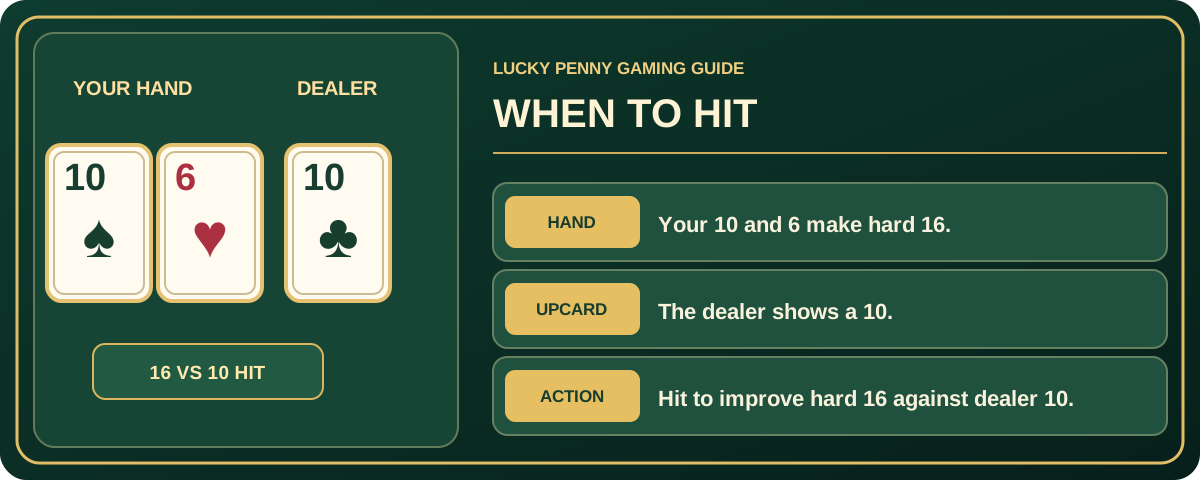
On the Lucky Penny table, stand on hard 16 against dealer 2–6 and hit against dealer 7 through ace. Against a 10, hitting can end the hand immediately, but standing usually leaves a weak total against a dealer likely to complete a stronger hand.
Two important detours: split a pair of eights, and remember that a casino offering late surrender may change the recommendation. Lucky Penny currently does not offer surrender.
Soft hands get their own rules
A soft hand contains an ace counted as 11. Because that ace can fall back to 1, you can often hit without immediately busting. Soft 18 is the hand to remember: double against dealer 3–6 when allowed, stand against 2, 7, or 8, and hit against 9, 10, or ace.
Soft 19 or better stands. Soft 17 or less generally hits unless the full chart identifies a doubling opportunity. The flexible ace value is what allows these hands to be played more aggressively.
Six decisions in the wild
The dealer is vulnerable. Standing allows the dealer to draw and potentially bust.
Sixteen is weak, but hitting performs better than standing against a dealer 10 under these rules.
Dealer 3 is not weak enough to make standing on 12 the preferred play.
Dealer 4 is a meaningful bust card. Standing allows the dealer to complete a hand with meaningful bust risk.
Standing preserves a competitive total against the dealer's 8.
Soft 18 needs help against a 9, and the ace means one more card cannot immediately bust the hand.
Three mistakes that look reasonable
- Playing only your total: A 15 against dealer 6 is not the same problem as 15 against dealer 10.
- Refusing to risk a bust: Sometimes hitting loses immediately, but it can still produce the better long-term expected result.
- Ignoring pairs and doubles: Before choosing hit or stand, confirm that split or double is not the preferred play.
Practice Hit-or-Stand Decisions
Open the free table and turn on Strategy Coach. It highlights the recommended action and explains the reasoning for each decision.