
Craps • Table rules
Pass Line vs. Don't Pass in Craps: How Each Bet Wins
These two bets begin on the come-out roll and take opposite sides once a point is set. The 12 is the one come-out result you should check twice.
Updated September 28, 2026
Practice the come-out roll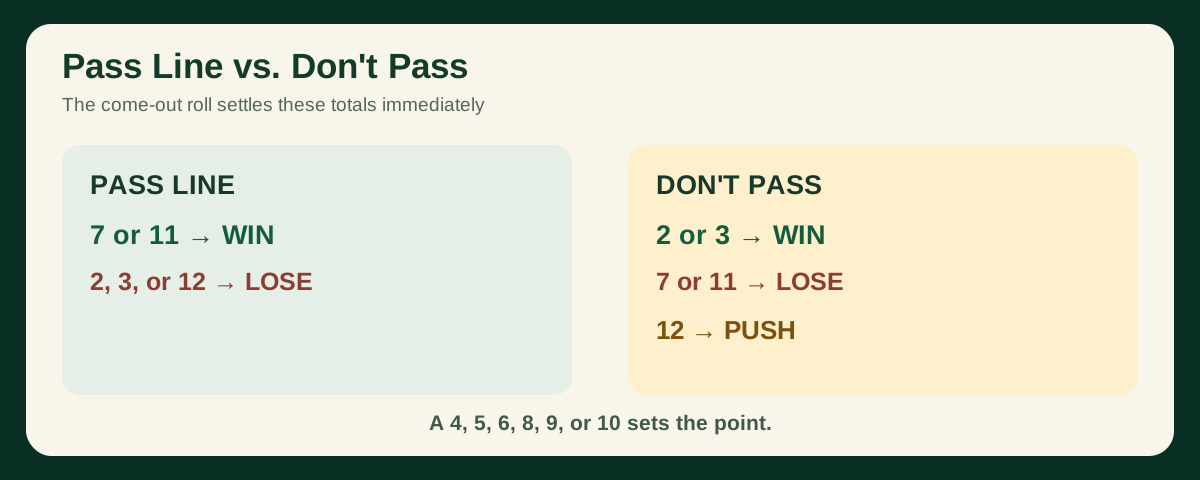
The come-out roll decides the first step
A Pass Line bet wins if the come-out roll is 7 or 11 and loses on 2, 3, or 12. A Don't Pass bet wins on 2 or 3, loses on 7 or 11, and pushes on 12. A push returns your original Don't Pass wager without profit. Both flat bets pay 1 to 1 when they win.
A roll of 4, 5, 6, 8, 9, or 10 establishes a point. Now the question changes from the next roll's total to which appears first: that point again or a seven.
| Come-out roll | Pass Line | Don't Pass |
|---|---|---|
| 7 or 11 | Wins | Loses |
| 2 or 3 | Loses | Wins |
| 12 | Loses | Pushes |
| 4, 5, 6, 8, 9, or 10 | Point established | Point established |
What changes once the point is on?
Suppose the shooter rolls a 6 to establish the point. If 6 repeats before 7, Pass Line wins and Don't Pass loses. If 7 appears first, Don't Pass wins and Pass Line loses. Rolls of other totals leave these two bets waiting for 6 or 7.
This is why Don't Pass is often called the dark side. It does not make the dice less random or guarantee a better session. The bar 12 push also means the two bets are not perfect mirror images on the come-out roll.
This comparison describes the flat bets. Pass Line odds and Don't Pass lay odds are separate wagers with their own stake sizes and payouts. Learn the basic point cycle before adding either one.
Practice one roll at a time
Begin a fresh round with a $10 Pass Line bet and watch 7, 11, 2, 3, and 12 settle. Then start a new round with $10 on Don't Pass and pay attention to 12. Once a point appears, follow the puck until that number repeats or a seven ends the hand.
Comparing outcomes side by side is an exercise in reading the table. The total amount you risk and the number of rolls you play still matter to your bankroll, whichever side you choose.
Try it at the table
Use practice credits to see how the rules work one decision at a time. There is no real-money wagering or cash prize.
Practice the come-out roll