
Craps • Beginner questions
Come-Out Roll vs. Seven-Out: Why a 7 Can Win or Lose
A 7 wins a Pass Line bet on the come-out but loses it after a point is set. Follow a $5 example and learn why different craps bets settle differently.
Updated October 16, 2026
Try the free craps table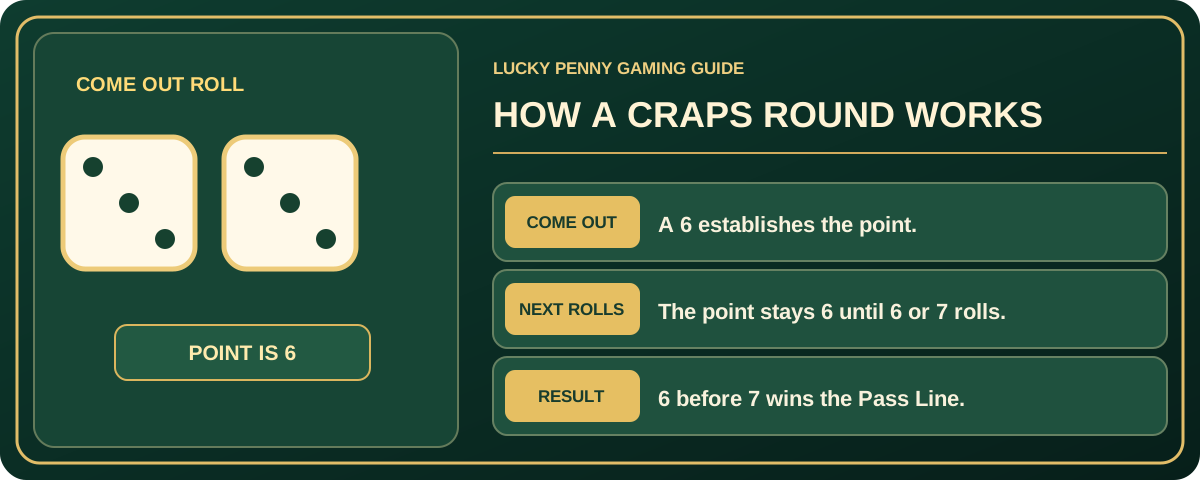
Check the puck before judging the roll
On standard craps, the same total can mean different things depending on the phase. The come-out roll starts a new Pass Line decision. The puck is OFF. If a point is established, the puck turns ON and marks that number.
For the Pass Line, a come-out 7 or 11 wins. A come-out 2, 3 or 12 loses. A 4, 5, 6, 8, 9 or 10 becomes the point. A come-out 7 is not a seven-out.
Follow one $5 Pass Line wager
Place $5 on the Pass Line before the come-out. If the dice total 7, the wager wins $5 in profit and the next roll is another come-out. If the dice total 6 instead, 6 becomes the point and the original wager remains unresolved.
With 6 as the point, a later 6 wins the Pass Line wager and a later 7 loses it. Other totals do not settle that Pass Line decision. Rolling 8, then 5, then 6 still wins the original wager; the point was 6 throughout.
A seven-out does not mean every bet loses
Seven-out means a 7 appeared while a point was ON, ending that shooter’s point cycle. The Pass Line and working Place bets lose, but Don’t Pass wins when its point decision resolves on that 7. A one-roll wager settles under its own rule.
Come bets have their own travel and point sequence, which can overlap the main puck. Do not infer their result from the Pass Line alone. Side bets also have separate rules; our ATS tracker resets on any 7, including a come-out 7.
These are standard craps rules. Crapless Craps treats come-out 2, 3, 11 and 12 differently. Read the table’s rules before applying this guide to another variation.
A short practice drill
Start with only a small Pass Line wager. Before every roll say either “come-out” or “point is on,” and name the point if there is one. After the roll, explain why the wager won, lost or stayed on the layout.
When that feels comfortable, compare a Don’t Pass decision and then one Place bet. Add one rule at a time. More bets make the table busier; they do not make the next roll more predictable.
Try it at the table
Use practice credits to see how the rules work one decision at a time. There is no real-money wagering or cash prize.
Try the free craps table