
How to read Baccarat scoreboards and the Bead Road
Baccarat scoreboards organize completed Player, Banker, and Tie results. Learn how to read the Bead Road, track session results, and distinguish useful recordkeeping from unreliable pattern prediction.
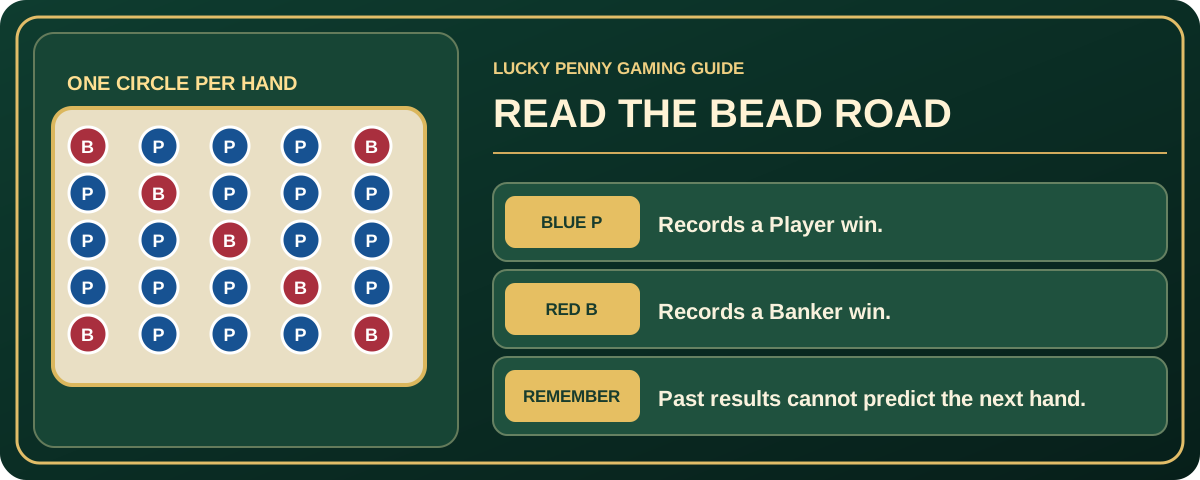
A Baccarat scoreboard records completed Player, Banker, and Tie results. Lucky Penny's Bead Road begins in the upper-left corner, fills downward, then moves to the top of the next column. It is a useful session record, but it cannot predict the next hand.
What does the scoreboard actually do?
Baccarat moves quickly, and the same two hand names appear every round. A scoreboard saves you from keeping the entire shoe in your head. It shows how many times each side has won, the order of those results, and whether the latest result is part of a streak.
Session scoreboard
Counts Player wins, Banker wins, Ties, and the current streak
Bead Road
Records every completed result in chronological order
Recent Hands
Shows the cards, totals, wagers, and payout for each hand
Read down, then move right
Begin with the circle in the upper-left corner. Read down the first column from top to bottom. After the sixth result, return to the top and move one column to the right. Every completed hand gets one position, including a Tie.
This sample contains 12 hands. The first six fill the left column. Hand seven starts at the top of the next column.
What does “current streak” mean?
It counts consecutive wins by the same side at the end of the recorded session. If the latest three hands were Banker, Banker, Banker, the current streak is Banker times three. A Tie ends that run on the Lucky Penny scoreboard because it is recorded as its own result.
That label is descriptive, not strategic. It summarizes the most recent results but does not make another Banker win more or less likely.
Why the road cannot predict the next hand
The next result comes from the cards remaining in the shoe and Baccarat's fixed drawing rules. The Bead Road knows only the labels attached to completed hands. It does not know which cards produced them, which cards remain, or what the dealer is about to draw.
The exact probabilities can shift slightly as cards leave the shoe, but a visible pattern of Player and Banker results is not the same thing as tracking card composition. The pattern remains a record of past outcomes.
Three pattern traps to leave at the door
“The result is due”
Six consecutive Banker wins do not make Player more likely on the next hand. The next result still comes from the cards remaining in the shoe and the fixed drawing rules.
“The streak must continue”
A run can continue, but the chart did not cause it. Following a streak and betting against one are both choices about a historical pattern, not changes to the game math.
“A betting system fixes the odds”
Changing wager size can change how quickly money moves. It does not turn a sequence of past circles into information about the next cards.
What about the other Baccarat roads?
Casino displays may also show the Big Road, Big Eye Boy, Small Road, and Cockroach Pig. The Big Road groups Banker and Player runs. The three derived roads compare parts of the Big Road's shape.
Red and blue on the derived roads do not directly mean Banker and Player. They describe chart structure. Lucky Penny starts with the Bead Road because chronological results provide the clearest introduction to Baccarat scoreboards.
A useful way to practice
- 1
Deal six hands and identify the first complete Bead Road column.
- 2
Say each result aloud before checking the newest circle.
- 3
Open Recent Hands and connect the circle to its cards and final totals.
- 4
Notice a streak without increasing the next wager because of it.
Let the scoreboard keep score
Deal a practice shoe, watch the circles fill from top to bottom, and use Recent Hands whenever you want the story behind a result.
Practice This on the Baccarat TableReferences: Wizard of Odds Baccarat Score Boards for Bead Road notation and roadmap structure, plus the Massachusetts Gaming Commission Baccarat rules for the underlying game and drawing procedures.